Institute for Materials and X-Ray Physics
  • Home
  • Group
    • Group
    • Alumni
  • Research
    • Articles
    • Invited Talks
    • Bachelor/Master/Diploma Theses
    • Dissertations
    • Habilitations
    • Google Scholar
  • Highlights
  • Calendar
  • Links
  • Contact Us

Select your language

  • Deutsch
  • English (UK)

Study on protein adsorption in mesopores published in Langmuir

26.2.2014 Study on protein adsorption in mesopores published in Langmuir.

"Protein Adsorption into Mesopores: A Combination of Electrostatic Interaction, Counterion Release and Van der Waals Forces" (pdf)


Dielectric Spectroscopy Study on a Nano Confined Liquid Crystal

2.3.2015 Dielectric relaxation spectroscopy reveals a radial partitioning in the structure and dynamics of a rod-like liquid crystal confined in silica nanochannels (published in Soft Matter).


Promotion Sebastian Mörz

12.12.2013 Sebastian Mörz got his PhD.


Promotion Volker Schön

27.9.2013 Volker Schön successfully defended his dissertation.


Wetting and Capillarity in Complex Systems, Dresden

18.2.2013-22.2.2013 Wetting and Capillarity in Complex Systems

International Workshop, Max-Planck Institute for the Physics of Complex Systems, Dresden (Germany)
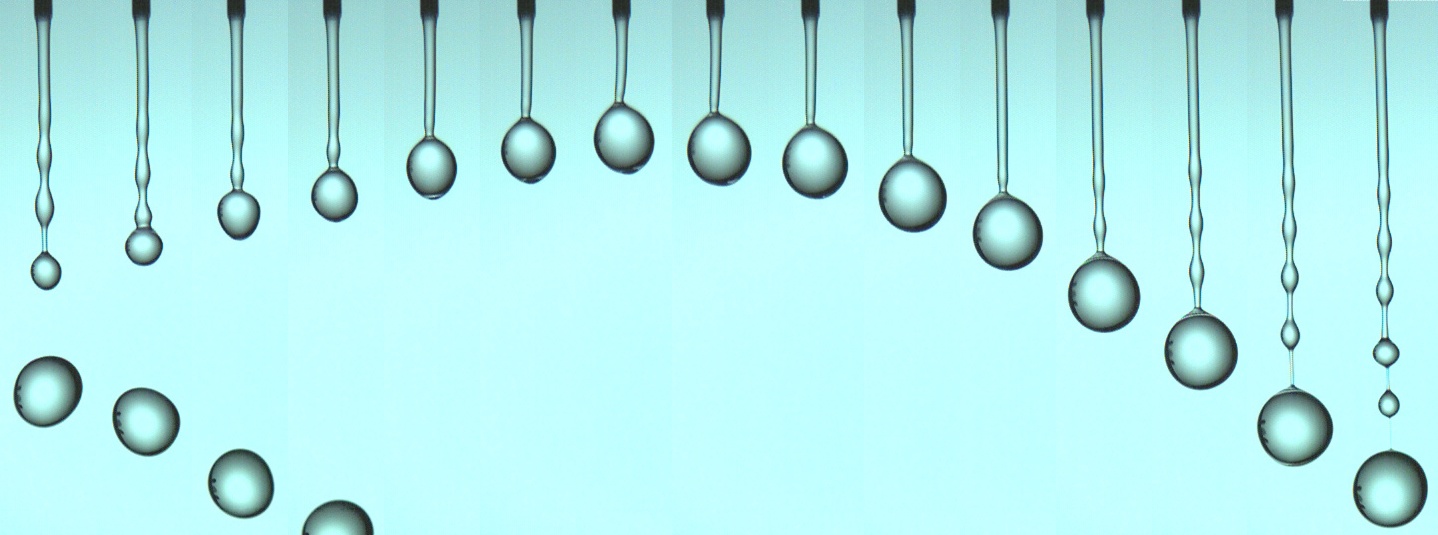
 

  1. Kapillarsteigexperimente mit nanoporösen Gläsern
  2. FRM Highlight
  3. Dr.-Eduard-Martin award to Simon Gruener
  4. Capillary Condensation and Crystallisation of Nitrogen in SBA-15

Page 16 of 23

  • 11
  • 12
  • 13
  • 14
  • 15
  • 16
  • 17
  • 18
  • 19
  • 20

News

  • 17.09.2026 A Tale of Two Waters: H₂O and D₂O Electrify Surfaces Differently

    Hydrophobic nanoporous silicon acts as a single platform for comparing three solid–liquid triboelectrification regimes: immersion–emersion, droplet contact, and pressure-driven pore intrusion, with H2O and D2O highlighting isotope-dependent electrical responses. Rather than providing one simple mechanism, the study published in The Journal of Physical Chemistry C opens new questions about the molecular origins of water–solid electrification—and shows how isotope substitution can help uncover them. 

    J. Phys. Chem. C (2026) 130 (36): 12748–12756.
    https://doi.org/10.1021/acs.jpcc.6c04134


  • 05.06.2026 Water, Clay and Carbon: A New Route to Sustainable Energy Storage

    🌎 Water, Clay and Carbon: A New Route to Sustainable Energy Storage - we demonstrate an all-water supercapacitor stable over 60,000 charging cycles. 

    💧⚡Can pure water store electrical energy? A research team within the Cluster of Excellence BlueMat – Water-Driven Materials has now shown that it can.

    🔋 By confining water within nanometer-sized channels in clay minerals, the team developed a supercapacitor capable of efficiently storing and transporting electrical charge with remarkable stability.

    💡 Read more in our latest press release ➡️ https://lnkd.in/dttmcBcQ

    Publication:
    Artemov, V. et al., All-water supercapacitor enabled by 1-nm clay channels, Nat Commun 17, 5014 (2026).

    https://www.nature.com/articles/s41467-026-73924-1

  • 23.04.2026 Lehmann Prize awarded to Patrick Huber

    🏆 Congratulations to Patrick Huber on receiving the Volker Lehmann Prize for the most outstanding talk at the 2026 Porous Semiconductors Science and Technology Conference (PSST2026) in Naples, Italy.

    💧 His presentation, “Nature’s Blueprint: Water-Enabled Functions in Hierarchically Porous Silicon,” showcased key research directions of the Cluster of Excellence BlueMat: Water-Driven Materials. 

    🏆 The Lehmann Prize honors Volker Lehmann, who—together with Leigh Canham and Ulrich Gösele - co-discovered the quantum confinement effect in silicon.

  • 22.10.2025  Water as an energy carrier: nanoporous silicon generates electricity from friction with water

    Exciting news! Our new publication in Nano Energy presents a novel way for converting mechanical energy into electricity – by harnessing water confined in nanometre-sized pores of silicon as the active working fluid (press release).

  • 29.09.2025 Colossal Effect of Nanopore Surface Ionic Charge on the Dynamics of Confined Water

    In a recent publication, we report a particularly rewarding result from a French-German collaboration linking Hamburg, Rennes, Grenoble and Paris, with key neutron scattering experiments carried out at the high-flux neutron reactor of the Institut Laue-Langevin in Grenoble, France. 

    We show that water behaves very differently when confined to tiny nanopores—and that surface charge makes all the difference. Adding ionic charges to pore walls dramatically slows down water motion, not just in the vicinity of the pore wall but throughout the entire pore. This long-range control goes far beyond simple wetting effects and highlights surface charge as a powerful tool for using water as a nanoscale working fluid in water-driven materials, membranes, and nanotechnologies.

Imprint

Data Privacy